





Introduction
Natural gas transmission and distribution pipelines form the backbone of modern energy infrastructure. Spanning thousands of kilometers across urban areas, rural regions, deserts, forests, mountains, and offshore environments, pipeline networks play a critical role in delivering energy safely and reliably.
Maintaining pipeline integrity is an ongoing challenge for operators worldwide. Corrosion, mechanical damage, aging infrastructure, ground movement, third-party interference, and equipment degradation can all contribute to methane leaks or other operational issues. Even relatively small leaks may result in product loss, environmental impacts, regulatory concerns, and potential safety risks if left undetected.
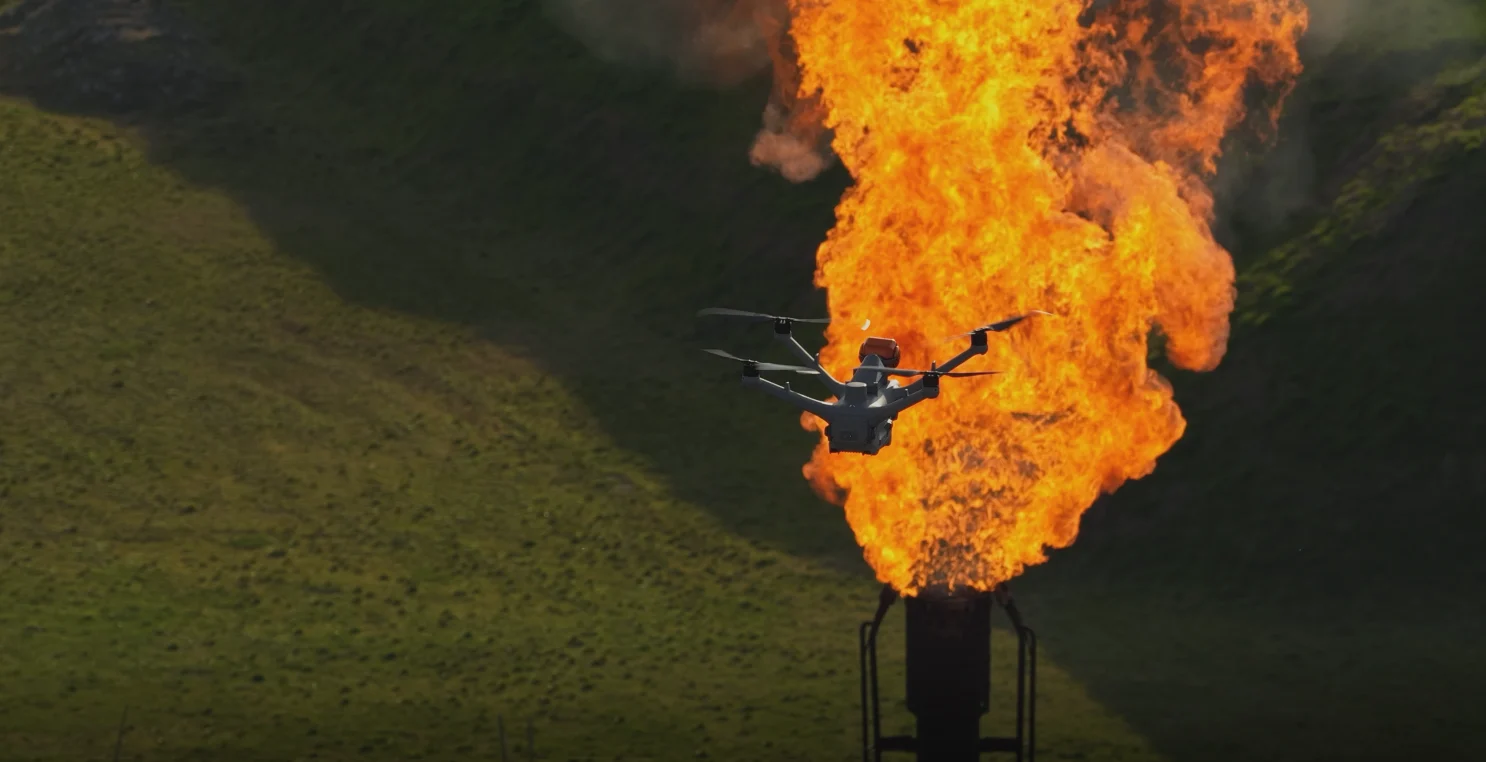
As governments and industry organizations place greater emphasis on methane emissions reduction and infrastructure safety, pipeline operators are increasingly adopting advanced inspection technologies that can improve monitoring efficiency while reducing operational costs. Among these technologies, Unmanned Aerial Vehicle (UAV) systems have emerged as a valuable tool for modern pipeline inspection programs.
Challenges of Traditional Pipeline Inspection
Historically, pipeline inspections have relied on a combination of methods, including:
- Ground patrols
- Vehicle-based leak surveys
- Foot inspections
- Helicopter overflights
- Fixed monitoring systems
- In-line inspection tools (smart pigs)
While these approaches remain important components of pipeline integrity management programs, they may present several limitations.
Coverage and Accessibility
Many pipelines traverse remote or difficult-to-access terrain. Reaching inspection locations may require significant travel time and logistical planning, particularly in mountainous regions, wetlands, deserts, or densely vegetated areas.
Operational Costs
Routine inspections conducted by field personnel or aircraft can be resource-intensive. Large pipeline networks often require substantial labor, equipment, and transportation expenses.
Inspection Frequency
Because traditional surveys can be time-consuming, inspections may occur only periodically. Potential leaks that develop between inspection cycles may remain undetected for extended periods.
Safety Considerations
Field personnel may be exposed to traffic hazards, difficult terrain, adverse weather conditions, or potentially hazardous environments during inspection activities.
These challenges have encouraged operators to explore technologies capable of improving inspection efficiency while maintaining high levels of safety and reliability.
The Role of UAV Systems in Pipeline Inspection
UAVs provide a flexible platform for collecting operational and environmental data along pipeline corridors. Depending on mission objectives, drones may carry various payloads, including:
- High-resolution visual cameras
- Thermal imaging sensors
- LiDAR systems
- Methane detection instruments
- Multispectral sensors
- GIS mapping equipment
By flying predetermined routes along pipeline rights-of-way, UAVs can rapidly survey large areas and provide detailed information that may be difficult to obtain through traditional inspection methods.
Compared with ground-based approaches, UAV inspections can often be completed more quickly while requiring fewer personnel in the field.
UAV-Based Methane Detection Technologies
Methane monitoring has become an increasingly important component of pipeline inspection programs due to growing regulatory requirements and emissions reduction initiatives.
Several sensing technologies may be deployed on UAV platforms for methane detection.
Tunable Diode Laser Absorption Spectroscopy (TDLAS)
TDLAS is widely used for remote methane detection because of its high sensitivity and selectivity.
The technique measures methane concentrations by analyzing the absorption of laser light at specific wavelengths associated with methane molecules. Open-path measurements can be performed from a distance, allowing operators to survey assets without requiring direct contact with the potential leak source.
Advantages may include:
- Rapid response times
- Long-range detection capability
- High methane specificity
- Minimal operational disruption
Optical Gas Imaging (OGI)
Optical Gas Imaging cameras visualize hydrocarbon gas emissions using infrared imaging technologies.
OGI systems can help inspectors identify gas plumes and locate potential emission sources under appropriate environmental conditions.
Emerging Technologies
Additional sensing approaches continue to evolve, including:
- LiDAR-based methane mapping
- Continuous monitoring networks
- AI-assisted anomaly detection
- Multi-sensor integrated inspection platforms
These technologies may complement existing inspection workflows and support more comprehensive emissions management strategies.
Benefits of UAV-Based Pipeline Inspection
Improved Inspection Efficiency
UAVs can inspect extended pipeline sections significantly faster than manual ground surveys.
Operators can rapidly collect large volumes of geo-referenced data while maintaining consistent inspection coverage.
Enhanced Safety
Remote inspection capabilities reduce the need for personnel to access hazardous locations, difficult terrain, or active industrial areas.
This can help minimize operational risks while maintaining inspection effectiveness.
High-Quality Data Collection
Modern UAV systems can simultaneously collect:
- Visual imagery
- Thermal data
- Methane concentration measurements
- GPS coordinates
- Infrastructure condition records
The resulting datasets can support detailed analysis and long-term asset management.
Faster Leak Identification
By enabling rapid screening of pipeline corridors, UAV systems may assist operators in identifying potential leak locations more quickly than traditional inspection approaches alone.
Early identification can support timely maintenance activities and reduce potential environmental impacts.
Reduced Operational Costs
Although implementation costs vary depending on program scale and technology selection, UAV-based inspections may reduce labor requirements, vehicle usage, and aircraft deployment costs over time.
Integration with Digital Asset Management
The value of UAV inspection extends beyond data collection.
Many operators are integrating UAV-generated information into broader digital asset management systems, including:
- Geographic Information Systems (GIS)
- Pipeline Integrity Management Systems (PIMS)
- Environmental compliance platforms
- Digital twins
- Cloud-based inspection databases
This integration enables inspection results to be analyzed alongside historical records, maintenance schedules, and operational data.
As digital infrastructure continues to mature, UAV inspection programs are becoming increasingly connected to enterprise-level decision-making processes.
Drone-in-a-Box and Autonomous Pipeline Monitoring
One of the most significant recent developments in UAV inspection is the emergence of Drone-in-a-Box (DIAB) systems.
A DIAB solution typically consists of:
- An autonomous drone
- Automated charging station
- Weather-resistant docking unit
- Remote communication system
- Mission planning software
Once deployed, the system can automatically launch, perform inspection missions, return to the dock, recharge, and prepare for subsequent flights with minimal human intervention.
Advantages of DIAB for Pipeline Inspection
Increased Inspection Frequency
Autonomous systems can perform inspections on a scheduled basis, enabling more frequent monitoring than traditional manual approaches.
Remote Operations
Pipeline operators can manage inspection activities from centralized control centers without requiring personnel to travel to the inspection site.
Near Real-Time Visibility
Frequent inspections may provide operators with more current information regarding asset conditions and potential leak events.
Scalability
DIAB systems may support large-scale monitoring programs across extensive pipeline networks by enabling distributed inspection infrastructure.
As regulations continue to evolve and expectations for emissions management increase, autonomous monitoring technologies are expected to play a growing role in pipeline operations.
Future Trends
Several trends are expected to influence the future of UAV-based pipeline inspection:
- lncreased automation and autonomous flight operations
- Greater integration of artificial intelligence and machine learning
- Enhanced methane quantification capabilities
- Expanded use of cloud-based analytics platforms
- Improved regulatory reporting workflows
- Broader adoption of continuous monitoring strategies
Together, these developments may further improve the effectiveness of pipeline integrity management programs while supporting environmental and operational objectives.
Conclusion
Pipeline operators face increasing pressure to improve safety, reduce methane emissions, and maintain the reliability of critical energy infrastructure. Traditional inspection methods remain important, but evolving operational requirements are driving the adoption of more efficient monitoring technologies.
UAV-based inspection systems offer a flexible and scalable approach for monitoring pipeline corridors, enabling rapid data collection, enhanced safety, and improved leak detection capabilities. When combined with advanced methane sensing technologies and emerging Drone-in-a-Box platforms, UAV systems have the potential to transform how pipeline networks are monitored and managed.
As automation, sensing technologies, and digital asset management systems continue to advance, UAV-based pipeline inspection is expected to become an increasingly important component of modern pipeline integrity and methane emissions management programs.
Disclaimer
This document is intended for informational and educational purposes only. It does not constitute engineering, legal, regulatory, or operational advice. The performance and applicability of any monitoring approach may vary depending on environmental conditions, system configuration, and site-specific factors. Users should refer to applicable standards and qualified professionals for implementation decisions.
References
1. International Energy Agency (IEA). Methane Tracker 2025.
2. U.S. Pipeline and Hazardous Materials Safety Administration (PHMSA). Pipeline Safety Management Systems Guidance.
3. U.S. Environmental Protection Agency (EPA). Methane Emissions Reduction Program.
4. European Commission. EU Methane Regulation Framework.
5. American Petroleum Institute (API). Pipeline Integrity Management Recommended Practices.
6. International Gas Union (IGU). Natural Gas Infrastructure and Methane Management Reports.