





Introduction
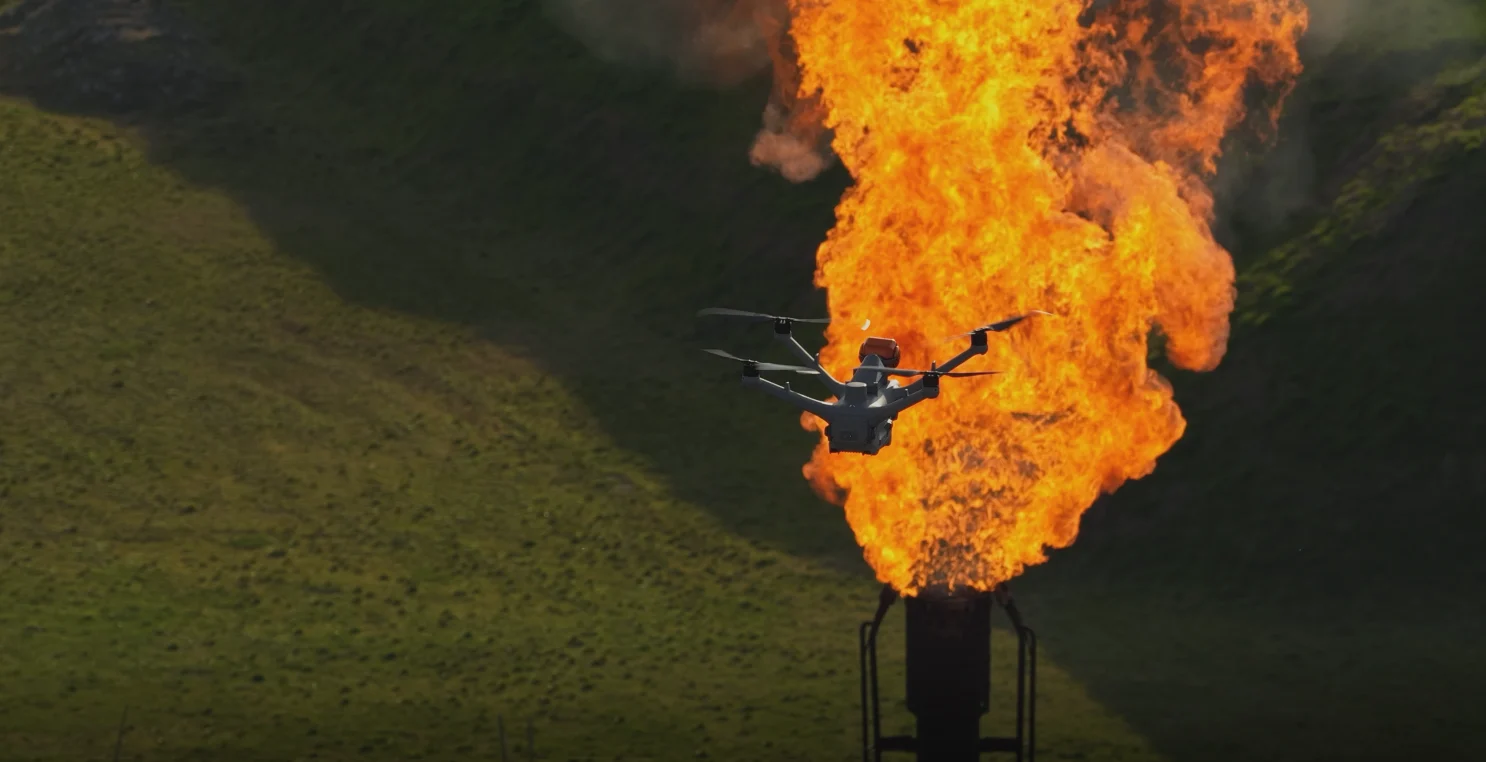
Methane monitoring is an important part of operational safety and emissions management across oil and gas facilities, urban gas networks, chemical plants, landfills, and other industrial sites.
Traditional contact-based instruments provide localized measurements but generally require inspectors to approach potential leak sources and examine equipment point by point. This can be time-consuming or difficult when inspecting extensive pipelines, elevated infrastructure, restricted areas, or potentially hazardous environments.
TDLAS, or Tunable Diode Laser Absorption Spectroscopy, offers a non-contact approach. By analyzing the characteristic light absorption of methane molecules, TDLAS systems can detect methane remotely without drawing gas directly into the instrument. The technology is particularly suitable for UAV inspection, pipeline screening, and large-area methane monitoring.
What Is TDLAS Methane Detection?
TDLAS is a laser-based detection technology that identifies gases through their characteristic molecular absorption spectra.
Different gases absorb light at specific wavelengths, creating distinct spectral “fingerprints.” Methane has well-defined absorption features in the near-infrared region. A TDLAS methane detector tunes a narrow-linewidth laser across a selected methane absorption line and analyzes how the optical signal changes after passing through a methane-containing path.[1][2]
Because the laser is tuned to a methane-specific absorption feature, the system provides high gas selectivity and can reduce interference from gases that do not absorb light within the same spectral range.
Unlike contact or sampling detectors, remote TDLAS systems can direct a laser toward a surface and analyze the returned optical signal. This allows methane to be detected from a safer distance.
How Does TDLAS Work?
A typical remote TDLAS methane detection process consists of four main stages.
1. Laser Emission
The system emits a narrow-linewidth laser tuned around a selected methane absorption line. The laser wavelength is rapidly scanned or modulated across the target spectral feature.
This wavelength-specific design enables the instrument to identify methane while reducing interference from unrelated gases and background variations.
2. Laser Propagation and Gas Interaction
The laser travels through the measurement path toward a reflecting surface, such as the ground, a pipeline, a storage tank, or another industrial asset.
If methane is present along the optical path, methane molecules absorb part of the laser energy at the selected wavelength. The remaining laser signal is reflected by the target surface and returned to the instrument.
The strength and quality of the returned signal may be influenced by:
- Methane concentration
- Length of the methane-containing path
- Detection distance
- Target reflectivity
- Measurement angle
- Atmospheric and environmental conditions
3. Optical Signal Detection and Analysis
The detector receives the reflected laser signal and analyzes its spectral characteristics.
By comparing absorption and reference signals, the system extracts methane-related absorption features from background noise and changes in reflected intensity. Signal-processing methods may also be used to improve measurement stability under changing field conditions.
4. Concentration Calculation
Based on the Beer–Lambert law, the measured optical absorption is converted into a path-integrated methane concentration, typically expressed in ppm·m.[2][3]
In simplified form:
ppm\cdotpm=methane concentration (ppm)×gas path length (m)
The result represents the accumulated methane concentration along the laser path rather than the volumetric concentration at one specific point.
What Does ppm·m Mean?
Understanding the difference between ppm and ppm·m is essential when interpreting TDLAS measurements.
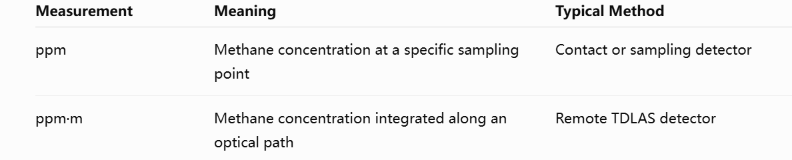
For example, a reading of 100 ppm·m could represent:
- 100 ppm of methane across a 1 m path
- 50 ppm across a 2 m path
- 20 ppm across a 5 m path
These conditions may produce similar path-integrated readings. Therefore, a TDLAS measurement alone cannot determine the exact local concentration or physical thickness of a methane plume.[3][4]
A ppm·m reading should also not be interpreted directly as an emission rate, such as kilograms per hour. Estimating an emission rate requires additional information and calculation methods, including wind data, plume geometry, spatial measurements, and an appropriate quantification model.
Advantages of TDLAS Methane Detection
Non-Contact Measurement
Remote TDLAS systems can detect methane without placing the sensor directly inside the gas plume. Inspectors can remain farther away from elevated equipment, restricted zones, and suspected leak sources.
Long-Range Detection
Depending on the instrument, target surface, atmospheric conditions, and methane plume characteristics, TDLAS can support measurements over extended distances. This makes it suitable for screening pipelines, storage tanks, processing equipment, and distributed industrial assets.
High Gas Selectivity
The laser targets a characteristic methane absorption line, providing strong selectivity and reducing interference from gases without the same spectral feature.
Rapid Measurement
TDLAS systems can update measurements quickly, allowing operators to scan multiple locations and identify elevated methane readings during an inspection.
Flexible Platform Integration
TDLAS sensors can be integrated with different inspection platforms, including:
- UAVs
- Ground robots
- Inspection vehicles
- Fixed monitoring systems
- Handheld devices
This flexibility allows the technology to support both targeted inspections and broader mobile monitoring programs.
UAV-Based TDLAS Methane Inspection
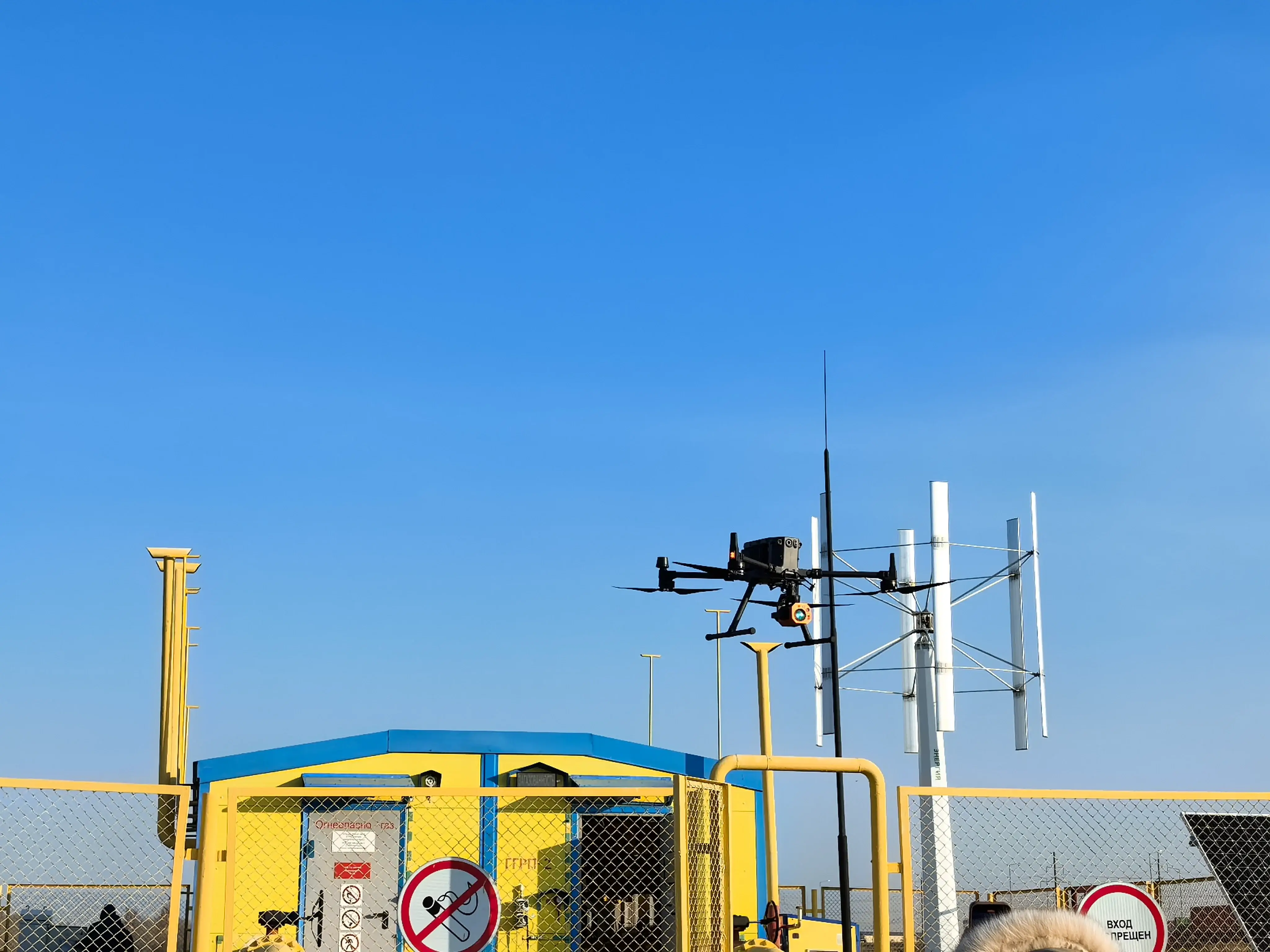
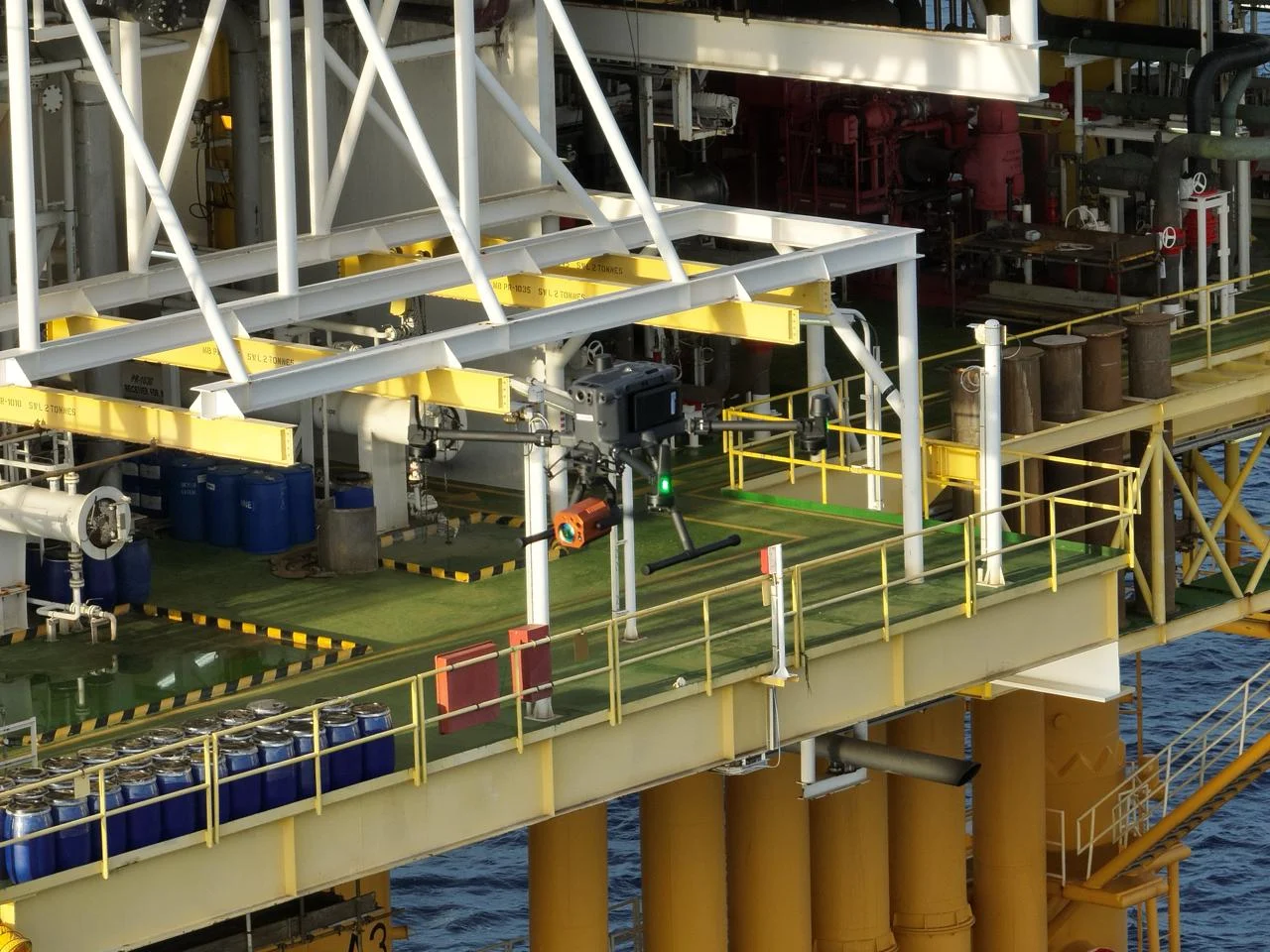
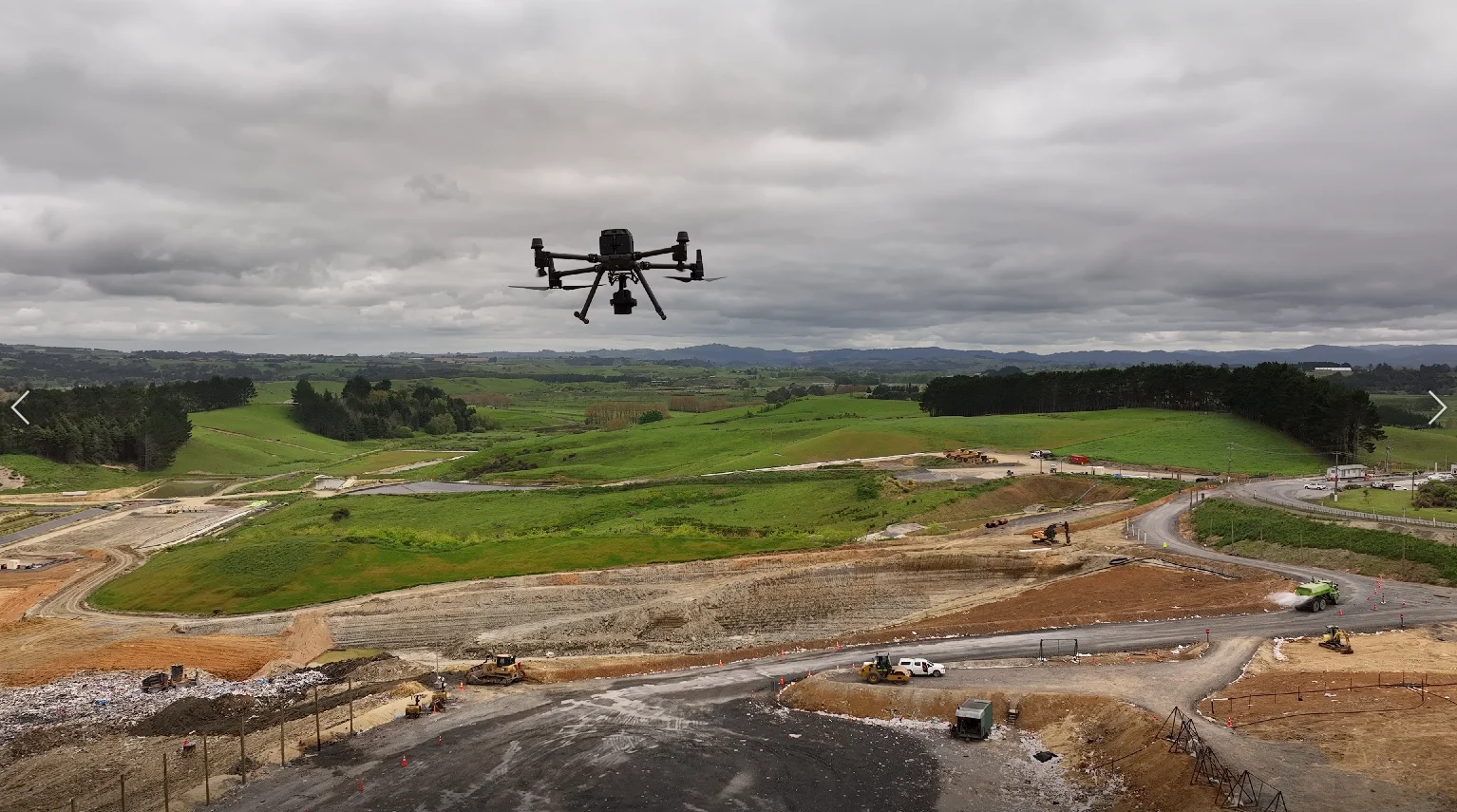
Integrating TDLAS with a UAV combines remote methane sensing with aerial mobility. The UAV carries the sensor across the inspection area while the laser continuously measures methane along its optical path.[5][6]
This approach is particularly valuable when industrial assets are widely distributed, elevated, or difficult to access. Typical inspection targets include:
- Long-distance gas pipelines
- Storage tanks and tank roofs
- Wellheads and production equipment
- Refineries and processing facilities
- LNG infrastructure
- Landfill surfaces
- Biogas facilities
- Hillside and remote gas networks
Depending on the platform and software configuration, UAV-based systems may support planned flight routes, real-time methane readings, georeferenced measurements, inspection records, and post-flight reports.
UAV-mounted TDLAS is generally used as an efficient screening and localization tool. It helps operators identify areas with elevated readings and prioritize them for closer investigation, confirmation, or repair.
Factors Affecting Detection Performance
Although TDLAS offers high gas selectivity, field performance depends on the complete measurement environment rather than detection distance alone.
Target Reflectivity
Remote TDLAS relies on sufficient laser energy being reflected back to the detector. Bright or diffusely reflecting surfaces often provide stronger return signals, while dark, highly absorptive, transparent, or mirror-like surfaces may reduce signal quality.
Detection Distance
As the measurement distance increases, less reflected energy may return to the detector. Longer distances can therefore affect signal strength and measurement stability.
Methane Plume Position
The laser beam must pass through the methane plume. A leak may not produce a clear reading if wind carries the plume away from the optical path or if the beam does not intersect the gas.
Wind and Atmospheric Conditions
Wind affects plume direction, concentration, and dispersion. Strong or variable wind may dilute methane or move the plume rapidly, resulting in fluctuating measurements.
Measurement Geometry
The relative positions of the detector, methane plume, and reflecting surface influence the effective absorption path. Flight altitude, viewing angle, scanning direction, and route design should therefore be considered during UAV inspections.
System Configuration
Laser power, receiving optics, sampling rate, signal-processing methods, and platform stability can all affect detection performance. Specifications should therefore be evaluated together with actual operating conditions.
Typical Industrial Applications
Oil and Gas Production
TDLAS can be used to screen wellheads, separators, valves, pipelines, tanks, and processing equipment for elevated methane readings.
Natural Gas Transmission and Distribution
UAV-mounted, vehicle-mounted, handheld, and robotic systems can support pipeline screening across urban, rural, hillside, and difficult-to-access environments.
Refineries and Chemical Facilities
Remote detection can complement existing inspection programs by screening elevated equipment, extensive pipe racks, storage areas, and restricted zones.
LNG Terminals
TDLAS can support methane monitoring around storage, transfer, and processing infrastructure while reducing the need for personnel to approach every inspection point.
Landfills and Biogas Facilities
Mobile and UAV-based measurements can help identify methane hotspots across large or uneven surfaces and around distributed gas collection equipment.
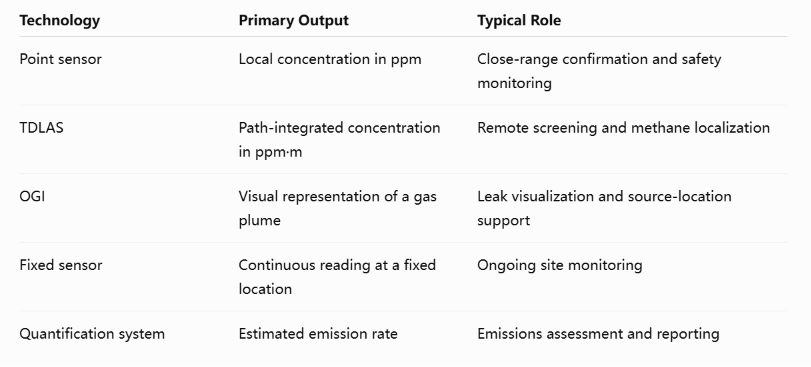
Combining different technologies can support a more complete workflow, from wide-area screening and leak visualization to close-range confirmation and emission quantification.
Conclusion
TDLAS provides a selective, rapid, and non-contact method for detecting methane in complex industrial environments. By measuring methane absorption along a laser path, it supports long-range screening and provides path-integrated concentration data in ppm·m.
When integrated with UAVs, robots, vehicles, or fixed platforms, TDLAS can expand inspection coverage and reduce the need for personnel to approach difficult or potentially hazardous locations. Its primary value lies in rapidly identifying elevated methane readings and directing further investigation toward priority areas.
As autonomous inspection, positioning, data analysis, and multi-sensor integration continue to develop, TDLAS is expected to play an increasingly important role in industrial safety, leak detection, and methane emissions management.
Disclaimer
This document is intended for informational and educational purposes only. It does not constitute engineering, legal, regulatory, or operational advice. The performance and applicability of any monitoring approach may vary depending on environmental conditions, system configuration, and site-specific factors. Users should refer to applicable standards, equipment documentation, and qualified professionals when making implementation or operational decisions.
References
[1] Gordon, I. E., et al. “The HITRAN2020 Molecular Spectroscopic Database.” Journal of Quantitative Spectroscopy and Radiative Transfer, Vol. 277, 2022, 107949.
HITRAN Molecular Spectroscopic Database
[2] Goldenstein, C. S., Spearrin, R. M., Jeffries, J. B., and Hanson, R. K. “Infrared Laser-Absorption Sensing for Combustion Gases.” Progress in Energy and Combustion Science, Vol. 60, 2017, pp. 132–176.
https://doi.org/10.1016/j.pecs.2016.12.002
[3] U.S. Environmental Protection Agency. Optical Remote Sensing for Measurement and Monitoring of Emissions Flux. Emission Measurement Center Guideline Document GD-052, 2011.
EPA Optical Remote Sensing Guideline
[4] U.S. Environmental Protection Agency. Other Test Method 10: Optical Remote Sensing for Emission Characterization from Non-Point Sources.
EPA Other Test Method 10
[5] Wu, Q., et al. “Highly Responsive, Miniaturized Methane Telemetry Sensor Based on Open-Path Tunable Diode Laser Absorption Spectroscopy.” Photonics, Vol. 10, No. 11, 2023, 1281.
https://doi.org/10.3390/photonics10111281
[6] Wang, D., et al. “Vertical Distribution Mapping for Methane Fugitive Emissions Using Laser Path-Integral Sensing in Non-Cooperative Open Paths.” Sensors, Vol. 24, 2024.
Read the research paper